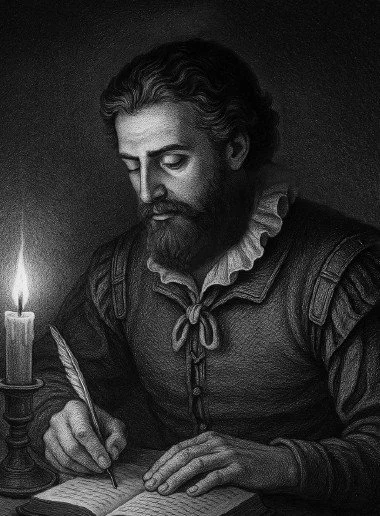
The Carvajal Manuscript
A history worth remembering
The text presented in this book is drawn from the manuscript of Luis de Carvajal the Younger, calling himself Joseph Lumbroso (Joseph the Enlightened), written between 1591 and 1594 in New Spain (present-day Mexico). Carvajal composed this work during the brief period between his first arrest and imprisonment by the Inquisition and his second arrest, which ultimately led to his execution in 1596.
Carvajal wrote the manuscript with the intention that it would reach his brothers, Baltasar and Miguel, who had managed to escape to Europe. He hoped they would share his writings with Jewish communities there so that they might learn of the suffering endured by their co-religionists in the Spanish colonies because of their continued adherence to Jewish belief and practice. In this way, the manuscript stands not only as a personal testimony, but also as a historical witness to the experience of crypto-Jews living under the threat of the Inquisition in the New World.
The narrative recounts the story of Luis de Carvajal and his family following their arrival in New Spain. It describes their struggles to establish themselves in an unfamiliar and often inhospitable environment, while quietly maintaining their devotion to Jewish belief and practice. As pressures from colonial society and the Inquisition intensify, the story follows the gradual unraveling of their circumstances, culminating in the family’s arrest and imprisonment.
At once personal and historical, the manuscript offers a vivid account of faith, hardship, and resilience during a turbulent period. This edition presents the story in a literary form that highlights the development of its characters and events while remaining faithful to the structure and voice of the original manuscript.
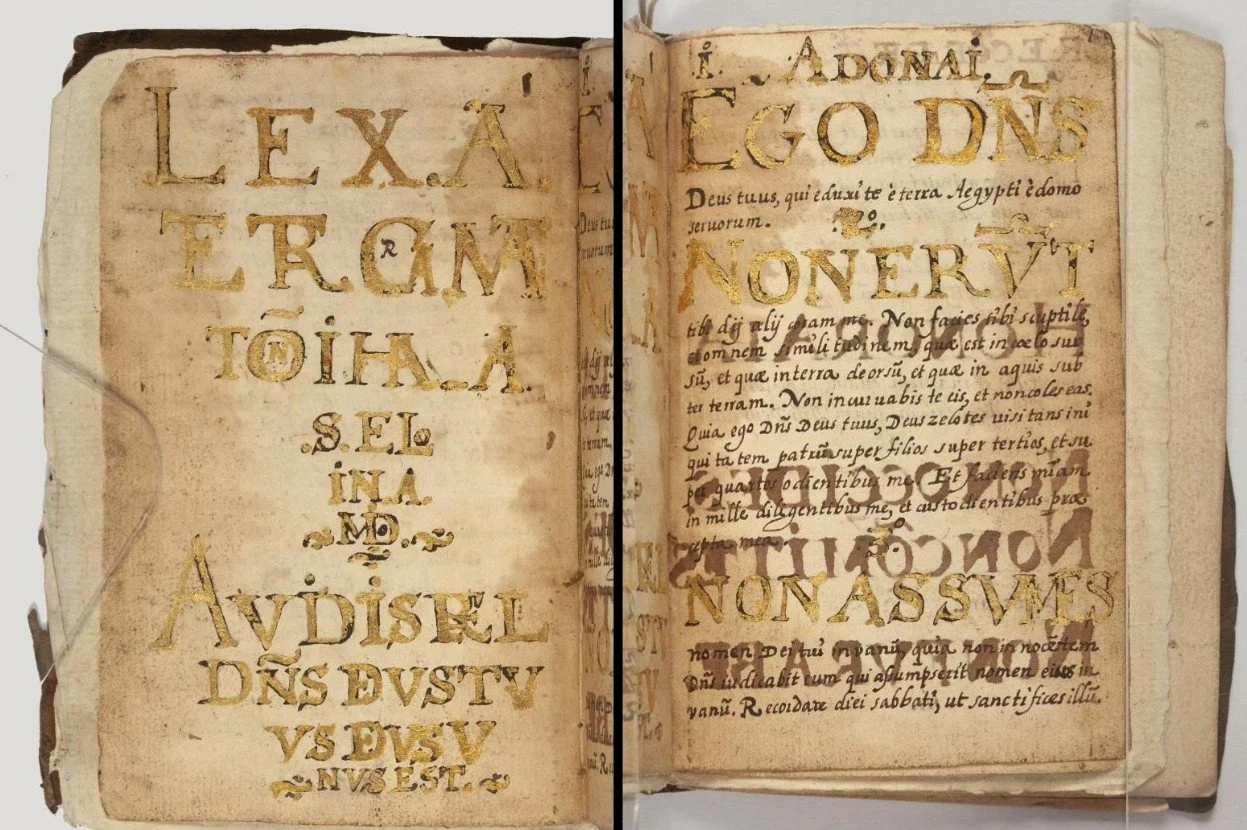
Carvajal’s manuscript, from the Princeton University Library
On Translating the Text
Translating the Carvajal manuscript presents several unique challenges. The original text was written in sixteenth-century Castilian Spanish, at a time before Judeo-Spanish (Ladino) had fully developed as a distinct linguistic tradition. Although the language of the manuscript shares many features with the form of Spanish that Sephardic communities carried into exile, it does not yet reflect the phonological shifts, vocabulary influences, and structural developments that Ladino acquired over the following centuries.
For this reason, the translation required a careful balance, and is therefore presented as a literary work. Many elements of Carvajal’s language closely resemble those preserved in Ladino, while others reflect an earlier stage of the language before later Sephardic innovations emerged. The goal of this work is therefore to render the text creatively into Ladino in a way that remains faithful both to the historical development of the language and to the spirit of Carvajal’s original voice.
To support this process, the book outlines the methodology used in the translation, including key phonological and morphological decisions, preferences in vocabulary, and other distinctive linguistic features. These choices aim to produce a translation that is authentically Ladino while still preserving a strong historical connection to the sixteenth-century Castilian spoken by Carvajal himself.